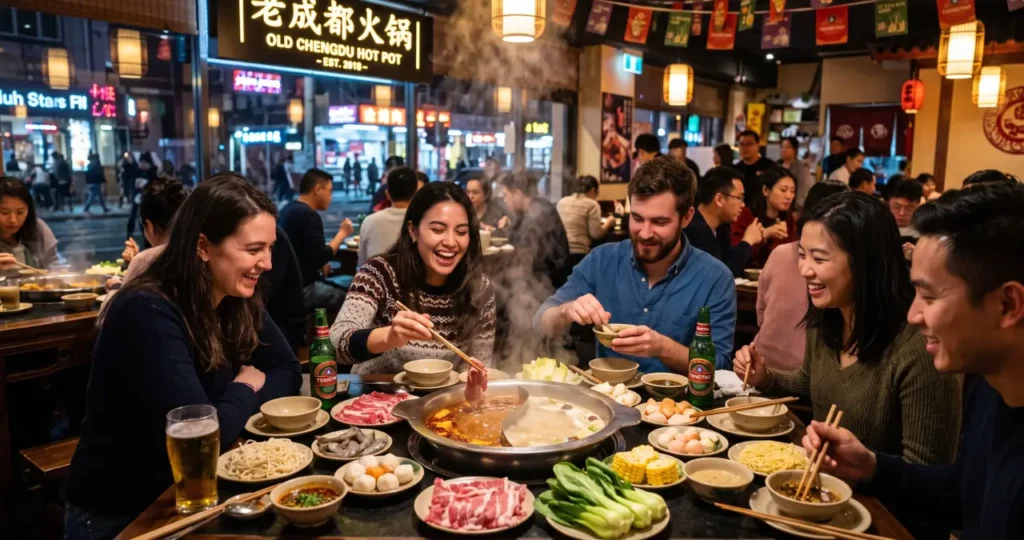

Searching for hot pot near me usually means you want more than a restaurant name. You want a place with good food, a suitable broth, fair pricing, convenient hours, and an experience that matches your group.
Hot pot is a communal meal where a pot of simmering broth sits at the table while diners cook ingredients such as meat, seafood, vegetables, tofu, mushrooms, and noodles. Because restaurants can differ significantly in broth styles, ordering formats, atmosphere, and pricing, knowing what to check before choosing can save you from a disappointing meal.
How to Find the Best Hot Pot Near Me
The best hot pot restaurant depends on your priorities, so compare location, recent reviews, menu, broth choices, pricing, and hygiene rather than choosing the closest listing alone. A restaurant with slightly more travel time may offer a better broth selection, fresher ingredients, or a dining format that suits your group.
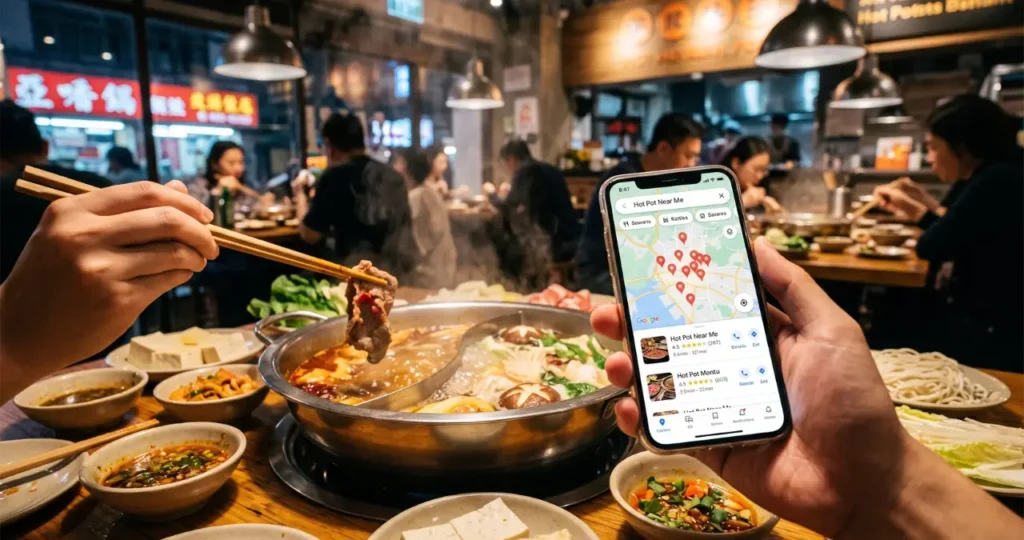
Start with Google Maps or another local map service and search for hot pot near me. Look beyond the star rating and check recent customer reviews, photographs, opening hours, menu information, and whether the restaurant specializes in the type of hot pot you want.
Pay particular attention to reviews mentioning:
- Broth flavor and quality
- Freshness of meat and vegetables
- Portion sizes
- Service speed
- Cleanliness
- Sauce selection
- Waiting times
- Value for money
- Vegetarian or dietary options
Recent reviews are especially useful because restaurants can change menus, prices, staff, or operating hours.
If you are visiting during a busy evening or weekend, checking whether reservations are accepted can also be worthwhile.
What Is Hot Pot?
Hot pot is a shared dining experience in which diners cook raw ingredients in a heated broth at the table. The format varies by cuisine and region, but the basic idea remains the same: choose a broth, select ingredients, cook them in the pot, and eat them with dipping sauces.
Chinese hot pot includes many regional traditions, while related formats such as Japanese shabu-shabu and other Asian hot-pot styles use their own broths, ingredients, and cooking customs.
A typical restaurant may provide:
- A central pot and heating source
- One or more broth choices
- Plates of uncooked ingredients
- Individual bowls and utensils
- Dipping sauces or a sauce station
- A menu with individual items, sets, or all-you-can-eat options
The interactive format makes hot pot particularly suitable for groups because everyone can choose what to cook and how much to eat.
Hot Pot Near Me: Which Broth Should You Choose?
The broth is one of the most important decisions because it flavors ingredients as they cook. If your group has different spice preferences, a divided or dual-flavor pot can be a practical choice when the restaurant offers one.
Popular broth categories can include:
Spicy Sichuan-style broth
This style commonly features chili and Sichuan peppercorns, producing a combination of heat and a distinctive numbing sensation. It suits diners who enjoy strong, spicy flavors.
Clear or mild broth
A clear broth generally provides a gentler base and lets ingredients such as meat, mushrooms, tofu, and vegetables stand out. It is often the easiest choice for first-time diners who are unsure about spice.
Tomato-based broth
Tomato broth provides a tangy, savory alternative to heavily spicy bases. Availability depends on the restaurant.
Mushroom or vegetable broth
These broths can work well for diners who prefer earthy flavors or want a plant-focused meal.
When searching for hot pot near me, check the menu before visiting if broth choice is important. Some restaurants offer several bases, while others focus on a particular regional style.
What Should You Order at a Hot Pot Restaurant?
A balanced order usually combines protein, vegetables, mushrooms, tofu, and a starch rather than filling the table with only meat. Start with a manageable amount because many restaurants allow you to order additional plates during the meal.
Good options may include:
- Thinly sliced beef
- Lamb
- Pork
- Chicken
- Shrimp
- Fish or seafood
- Tofu
- Tofu skin
- Napa cabbage
- Leafy greens
- Enoki or other mushrooms
- Dumplings
- Fish or meat balls
- Glass noodles
- Wheat noodles
- Udon or similar noodles
Thinly sliced meat often cooks quickly, while firmer vegetables, mushrooms, and some processed ingredients may need more time.
A useful strategy is to order variety instead of quantity. For two diners, for example, you might start with one or two proteins, two vegetable or mushroom choices, one tofu item, and one noodle or other starch. Adjust the amount according to the restaurant’s portion sizes and your appetite.
How to Eat Hot Pot for the First Time
Start by bringing the broth to a proper simmer, then cook ingredients in manageable batches. Keep raw ingredients separate from cooked food and make sure meat and seafood are thoroughly cooked before eating.
A simple sequence is:
1. Choose your sauce.
If there is a sauce station, begin with a small amount rather than mixing every condiment available.
2. Let the broth heat properly.
The cooking process works best when the broth is hot enough to cook the ingredients thoroughly.
3. Add ingredients gradually.
Putting too much food into the pot simultaneously can make it harder to track cooking and can reduce the broth temperature.
4. Cook according to the ingredient.
Thinly sliced ingredients may cook quickly, while thicker pieces and some vegetables require longer.
5. Remove cooked food promptly.
This helps prevent delicate ingredients from becoming overcooked.
6. Dip and eat.
Transfer cooked ingredients to your bowl and add your preferred sauce.
Official food-safety guidance also recommends separating raw and cooked foods and cooking hot-pot ingredients thoroughly because undercooked food and cross-contamination can cause foodborne illness.
How to Choose a Hot Pot Dipping Sauce
A good dipping sauce should complement the broth rather than overwhelm it. Start with two or three ingredients, taste the combination, and then add more seasoning if necessary.
Depending on the restaurant, you may find:
- Sesame paste
- Sesame oil
- Soy sauce
- Vinegar
- Chili oil
- Garlic
- Scallions
- Cilantro
- Chili paste
- Satay or shacha-style sauces
For a rich or spicy broth, an aromatic sauce with sesame oil, garlic, and fresh herbs can provide contrast. For a mild broth, soy sauce, sesame, vinegar, and aromatics can add more intensity.
There is no universal “correct” sauce because combinations vary by regional tradition and personal preference.
Hot Pot Near Me: All-You-Can-Eat or À La Carte?
The choice between all-you-can-eat and à la carte hot pot depends on how much variety your group wants and how much everyone expects to eat. À la carte can be better for smaller appetites, while all-you-can-eat can make sense for groups that want to sample many ingredients.
All-you-can-eat hot pot
This format typically charges a set price and lets diners order from a defined selection. It can offer good flexibility, but check the restaurant’s rules before ordering.
Some restaurants may have different menus or prices for premium ingredients, drinks, desserts, or leftover food.
À la carte hot pot
You pay for individual ingredients or sets. This gives you more control over what you order and can be useful if one person wants seafood while another prefers vegetables or meat.
Set menus
Some restaurants offer combinations designed for a certain number of diners. These can simplify ordering, particularly for first-time customers.
When comparing hot pot near me results, look at the pricing structure rather than comparing only the advertised headline price.
How Much Does Hot Pot Cost?
Hot pot prices vary widely by country, city, restaurant, ingredient quality, and dining format, so there is no single reliable price for every location. Premium seafood, specialty meats, larger portions, drinks, service charges, and all-you-can-eat formats can significantly affect the final bill.
Before choosing a restaurant, check whether the listed price covers:
- Broth
- Ingredients
- Sauce station
- Drinks
- Service charges
- Taxes
- Premium ingredients
- Extra broth
- Minimum spending requirements
This is one reason comparing the complete menu is more useful than relying on a restaurant’s basic advertised price.
What Makes a Good Hot Pot Restaurant?
A good hot pot restaurant should make the entire experience work, from ingredient freshness and broth quality to cleanliness and service. Excellent food can lose its appeal if the restaurant struggles with hygiene, poor ventilation, confusing ordering, or long waits.
Look for these practical signs:
Fresh-looking ingredients
Meat, seafood, vegetables, tofu, and mushrooms should appear properly stored and handled. Avoid making assumptions based solely on photographs; inspect the restaurant’s actual conditions when possible.
Clean tables and utensils
Because diners handle raw and cooked ingredients at the same table, cleanliness matters.
Good ventilation
Hot pot produces considerable heat and steam. Strong ventilation can make a noticeable difference to comfort, especially during a long meal.
Clear pricing
A straightforward menu makes it easier to understand what you are paying for before ordering.
Helpful staff
First-time diners may need guidance about broth choices, cooking methods, or ordering. Staff who explain the system clearly can make the experience much easier.
Hot Pot Safety Tips
Hot pot is safe to enjoy when diners handle raw ingredients carefully and cook food thoroughly. The biggest practical concerns are undercooking and cross-contamination between raw and cooked ingredients.
Use separate utensils for raw and cooked food whenever the restaurant provides them. Avoid placing cooked food back onto plates that held raw meat or seafood.
Keep raw ingredients away from ready-to-eat foods and do not assume that a quick dip is enough to cook thicker pieces safely.
For reference, U.S. food-safety guidance recommends 165°F (74°C) for poultry and 160°F (71°C) for ground meats, while whole cuts of beef, pork, lamb, and veal have a lower minimum temperature of 145°F (63°C) with a three-minute rest. Restaurant procedures and local food-safety requirements can differ, so follow the restaurant’s guidance and use a food thermometer where appropriate.
People with serious food allergies should also ask about ingredients and cross-contact, particularly at self-service sauce stations.
Hot Pot vs. Shabu-Shabu: What’s the Difference?
Hot pot and shabu-shabu share the idea of cooking ingredients at the table, but they are not identical dining traditions. Shabu-shabu is a Japanese style commonly associated with thinly sliced meat and a relatively lighter cooking broth, while Chinese hot pot covers a much broader range of regional broths and ingredients.
The exact experience depends on the restaurant. Some modern restaurants also combine influences from different traditions.
If you want a mild, simple introduction, shabu-shabu may appeal to you. If you want a broader selection of broths, sauces, and ingredients, a Chinese-style hot pot restaurant may offer more variety.
How to Choose Hot Pot Near Me for Different Groups
The best restaurant can change depending on who you are dining with. Families, couples, large groups, vegetarians, and spice lovers may need different features.
For a family, prioritize mild broth options, comfortable seating, and ingredients children will actually eat.
For a group with mixed spice preferences, look for a divided pot that allows different broths at the same table.
For vegetarians, confirm that the broth itself is vegetarian and ask about shared cooking utensils or cross-contact if this matters for your diet.
For spice enthusiasts, check whether the restaurant specializes in Sichuan or Chongqing-style hot pot and whether it offers different spice levels.
For a date or relaxed meal, atmosphere and ventilation may matter almost as much as the menu.
What to Check Before Visiting
Before selecting a hot pot near me result, spend two minutes checking the restaurant’s latest information. This simple step can prevent problems such as arriving after closing time, discovering that the restaurant only accepts reservations, or finding that the menu does not suit your group.
Check:
- Current opening hours
- Location and parking
- Reservation requirements
- Current menu
- Broth choices
- Pricing format
- Vegetarian options
- Allergy information
- Recent customer reviews
- Photos of the dining area
Do not rely on an old social media post for current hours or prices. Restaurant information can change.
FAQ
What is hot pot?
Hot pot is a communal meal where diners cook ingredients in a heated pot of broth at the table. Ingredients commonly include meat, seafood, vegetables, tofu, mushrooms, and noodles.
How do I find hot pot near me?
Use a local map or restaurant-search service and compare nearby restaurants by recent reviews, menu, broth choices, pricing, hours, and location. The closest restaurant is not necessarily the best match for your preferences.
Is hot pot spicy?
It depends on the broth. Some hot pots use very spicy chili-based broths, while others offer mild, clear, mushroom, tomato, or other non-spicy options.
What should a beginner order at hot pot?
Start with a balanced selection of thinly sliced meat, vegetables, mushrooms, tofu, and one noodle or other starch. Avoid ordering too much initially because you can often add more food later.
Is hot pot good for vegetarians?
It can be, but you should confirm the broth ingredients and cooking arrangements. Some broths contain meat, seafood, or animal-derived ingredients even when the vegetables themselves are vegetarian.
How long does a hot pot meal take?
There is no universal duration because restaurants and groups differ. Hot pot is generally a leisurely format because diners cook and eat ingredients throughout the meal rather than receiving one finished dish.
What sauce goes with hot pot?
Common sauce ingredients include sesame, soy sauce, vinegar, sesame oil, garlic, scallions, cilantro, and chili oil. The best combination depends on your broth and personal taste.
Is hot pot expensive?
It can range from relatively affordable to premium depending on the restaurant, location, ingredients, and ordering format. Always check whether broth, sauces, drinks, taxes, or premium ingredients cost extra.
Is hot pot safe to eat?
Yes, when the restaurant handles food properly and diners cook ingredients thoroughly. Raw and cooked foods should remain separated, and meats and seafood should not be eaten undercooked.
What should I look for in a hot pot restaurant?
Look for fresh ingredients, a clean dining environment, clear pricing, suitable broth choices, good ventilation, and recent reviews. For groups, also consider whether the restaurant offers a divided pot and accommodates different dietary preferences.