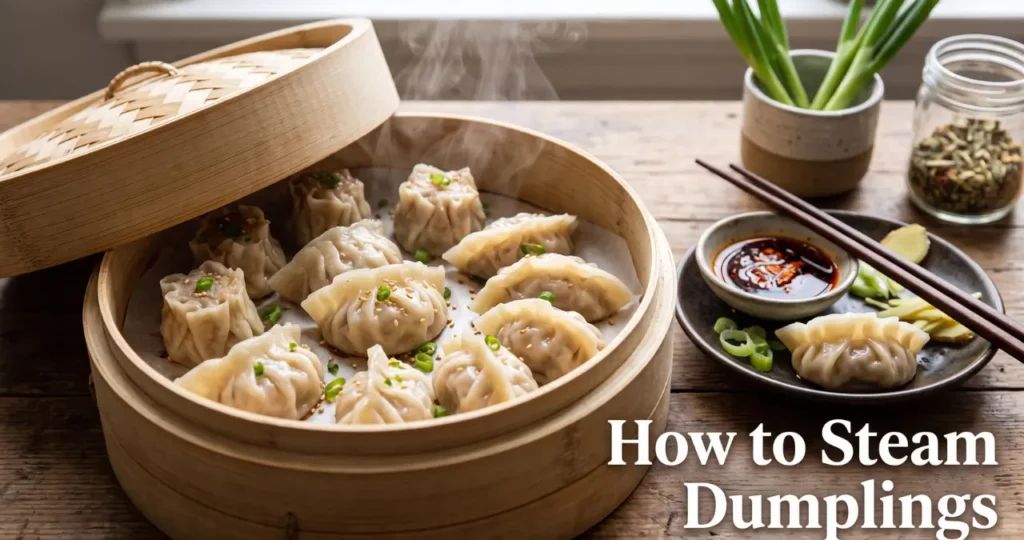

If you know how to steam dumplings, you can turn fresh or frozen dumplings into a tender, juicy meal without adding much oil. Steaming keeps the wrappers soft and slightly chewy while allowing the filling to cook gently.
The basic method is simple: line a steamer, bring the water to a steady simmer or boil, arrange the dumplings with space between them, cover, and steam until cooked through. Fresh dumplings commonly take around 8–10 minutes, while frozen dumplings may need longer depending on their size and filling.
This guide explains how to steam dumplings using a bamboo or metal steamer, how to cook frozen dumplings without thawing, how to prevent sticking, and what to do if you don’t own a steamer.
How to Steam Dumplings Step by Step
The easiest way to steam dumplings is to place them in a lined steamer basket above simmering water and cook them with the lid closed. Keep the dumplings separated so steam can circulate and the wrappers do not stick together.
What You Need
- Fresh or frozen dumplings
- Bamboo steamer, metal steamer, or steaming rack
- Pot or wok with a lid
- Water
- Parchment steamer liner, cabbage leaves, or another suitable liner
Step 1: Prepare the Steamer
Add enough water to the pot or wok to generate steam throughout cooking, but keep the water below the dumplings. With a bamboo steamer, the water should reach roughly the lower rim without touching the dumplings.
Bring the water to a boil or strong simmer before adding the dumplings. You want consistent steam rather than water splashing directly onto the food.
Step 2: Line the Basket
Line the steamer with parchment, cabbage leaves, lettuce leaves, or a suitable reusable steamer liner. This prevents the dumpling wrappers from sticking to the surface.
If using parchment, make sure steam can circulate through the basket rather than completely blocking the openings.
Step 3: Arrange the Dumplings
Place the dumplings in a single layer and leave roughly 1 inch of space between them when possible. Dumplings need room because the wrappers can expand slightly during cooking.
Do not overcrowd the basket. If you have a large batch, steam them in separate batches or use multiple steamer tiers.
Step 4: Cover and Steam
Put the basket over the simmering water and cover it tightly. Steam fresh dumplings for about 8–10 minutes as a starting point.
Cooking time varies with dumpling size, wrapper thickness, filling, and whether the dumplings started frozen. Larger homemade dumplings can take longer.
Step 5: Check for Doneness
The wrapper should be tender and cooked through, while the filling should be completely hot. If the filling contains raw meat, do not rely only on the appearance of the wrapper; check that the filling has reached a safe internal temperature.
Remove the lid carefully because escaping steam can cause burns.
How Long to Steam Dumplings
Fresh dumplings generally need about 8–10 minutes, while frozen dumplings often require additional cooking time. The exact time depends more on the dumpling’s size and filling than on whether you are using bamboo or metal.
Here is a practical starting guide:
| Dumpling type | Approximate steaming time |
|---|---|
| Small fresh dumplings | 8–10 minutes |
| Average fresh dumplings | 8–12 minutes |
| Larger homemade dumplings | 12–20 minutes |
| Frozen dumplings | About 10–15+ minutes |
| Large frozen dumplings | May require longer |
These are starting ranges rather than universal rules. For example, The Woks of Life recommends 8–10 minutes for frozen dumplings in one method, while Omnivore’s Cookbook gives 15–20 minutes for larger frozen dumplings. Size and filling explain much of this difference.
For packaged dumplings, always check the manufacturer’s cooking instructions first.
How to Steam Frozen Dumplings
Frozen dumplings can usually go directly into the steamer without thawing. In fact, cooking them from frozen helps preserve their shape and avoids the sticky texture that can develop when wrappers thaw and sit together.
Line your steamer, arrange the frozen dumplings with space between them, cover, and steam until the filling is completely cooked. The Woks of Life specifically recommends steaming frozen dumplings without thawing and gives an 8–10-minute starting time for its method.
However, don’t treat that number as a universal rule. A large frozen dumpling filled with raw pork may need considerably longer than a small vegetable dumpling.
Should You Thaw Frozen Dumplings Before Steaming?
Generally, no. Frozen dumplings can be steamed directly from the freezer.
Thawing can make wrappers softer and more difficult to handle, particularly if the dumplings are packed closely together. Keep them frozen until you’re ready to place them in the steamer, unless the package specifically gives different instructions.
How to Steam Dumplings Without a Steamer
You don’t need a traditional bamboo steamer to make steamed dumplings. A pot with a lid, heatproof plate, and raised rack can create a workable steaming setup.
Method 1: Pot and Steaming Rack
Place a heatproof rack inside a pot and add water below the rack. Put the dumplings on a heatproof plate or suitable steaming surface above the water.
Cover the pot and bring the water to a steady simmer. Steam until the dumplings are fully cooked.
The important principle is that the dumplings stay above the water rather than sitting in it. The Woks of Life describes several home setups using a pot or wok, a rack, and a heatproof dish.
Method 2: Metal Steamer Basket
A metal steamer is another easy option. Line the rack with cabbage leaves or parchment, arrange the dumplings, cover, and place the basket over simmering water.
This method is convenient when cooking several batches because many metal steamers have multiple tiers.
How to Keep Dumplings From Sticking
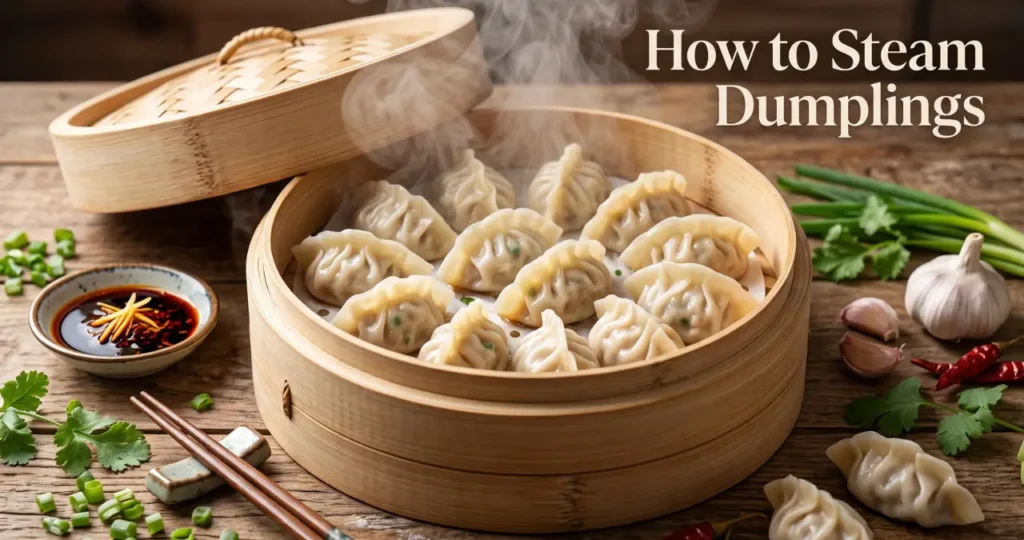
The easiest way to prevent steamed dumplings from sticking is to line the steamer before cooking. Parchment, cabbage leaves, and reusable steamer liners all create a barrier between the moist wrapper and the cooking surface.
Spacing matters too. If dumplings touch each other during steaming, their wrappers can stick together as they soften.
Best Anti-Sticking Options
Cabbage leaves: A traditional and convenient option that also makes cleanup easier.
Parchment: Easy to use and widely available. Perforated steamer liners allow steam to circulate.
Cheesecloth: Another option for lining a steamer rack.
Reusable steamer liners: Useful if you steam dumplings frequently.
The Woks of Life and MasterClass both recommend liners such as cabbage leaves or parchment to reduce sticking.
Bamboo vs. Metal Steamer for Dumplings
Both bamboo and metal steamers work well, but they offer slightly different cooking experiences. A bamboo steamer is traditional and can absorb some condensation, while a metal steamer is usually easier to clean and works well for everyday cooking.
| Feature | Bamboo steamer | Metal steamer |
|---|---|---|
| Best for | Traditional dumpling cooking | Convenience |
| Condensation | Can help reduce dripping | Can produce more condensation |
| Cleaning | Requires more care | Usually easier |
| Multiple tiers | Common | Common |
| Works with dumplings | Excellent | Excellent |
A bamboo steamer should sit over enough water to prevent scorching, but the water should not touch the dumplings.
One practical advantage of bamboo is serving: you can bring the entire basket to the table, allowing diners to enjoy the dumplings while they’re still hot.
Common Mistakes When Steaming Dumplings
Most problems with steamed dumplings come from excessive moisture, overcrowding, inadequate steaming time, or letting the basket run dry. Small changes can make a noticeable difference.
Using Too Much Water
The water should generate steam without touching the dumplings. If water splashes onto the wrappers, they can become soggy.
With bamboo steamers, also make sure there is enough water to prevent the base from scorching. Check the water level during longer batches and add more if necessary.
Overcrowding the Basket
Don’t pack dumplings tightly together. Leave space between them so they cook evenly and don’t stick.
Opening the Lid Repeatedly
Every time you remove the lid, steam escapes and the cooking environment changes. Keep the lid closed as much as possible and check only when you need to assess doneness.
Letting the Steamer Run Dry
This is especially important with bamboo steamers. Check the water level during extended cooking and add hot water if necessary.
Guessing the Cooking Time
An eight-minute cooking time isn’t automatically correct for every dumpling. A large homemade dumpling and a small frozen dumpling can have very different cooking requirements.
Use the recommended time as a starting point, then check the dumpling itself and follow package instructions when available.
What to Serve With Steamed Dumplings
Steamed dumplings pair naturally with dipping sauces, particularly soy-based sauces, Chinese black vinegar, chili oil, sesame oil, or combinations of these ingredients.
A simple sauce can be made by combining soy sauce with a little black vinegar and chili oil. You can adjust the balance depending on whether you prefer salty, sour, spicy, or slightly sweet flavors.
For a fuller meal, serve dumplings with steamed vegetables, cucumber salad, stir-fried greens, rice, or a light soup.
The advantage of steaming is that the dumpling itself stays relatively delicate, so a strong dipping sauce can add flavor without making the wrapper heavy.
Are Steamed Dumplings Healthier Than Fried Dumplings?
Steamed dumplings generally require little or no added cooking oil, while pan-fried dumplings use oil to brown and crisp the bottom. However, the overall nutritional value depends heavily on the filling, wrapper, portion size, and dipping sauce.
For example, a vegetable-filled dumpling and a pork-filled dumpling can have very different nutritional profiles regardless of how they are cooked.
Steaming is therefore a useful lower-oil cooking method, but it does not automatically make every dumpling a low-calorie or nutritionally balanced food.
How to Reheat Steamed Dumplings
Steaming is one of the best ways to reheat dumplings because it helps restore moisture without making the wrappers as dry as direct pan heating can.
Place the cooked dumplings in a lined steamer and steam until heated through. The exact time depends on how cold the dumplings are and how many you’re reheating.
If using a microwave, adding a small amount of water and covering the dumplings can help prevent the wrappers from drying out. Omnivore’s Cookbook also recommends reheating cooked dumplings by steaming for about five minutes.
FAQ
Can you steam dumplings from frozen?
Yes. Frozen dumplings can generally be placed directly into a prepared steamer without thawing. Cooking time varies by size and filling, so check the package instructions when available.
How long does it take to steam dumplings?
Fresh dumplings commonly take around 8–10 minutes, although larger dumplings can take longer. Frozen dumplings may require additional time depending on their size and filling.
Do you boil water before steaming dumplings?
Yes. Bring the water to a boil or steady simmer so that the steamer is producing steam before or as you begin cooking. The dumplings should sit above the water rather than directly in it.
Why are my steamed dumplings sticking?
The wrappers may stick because the steamer wasn’t lined, the dumplings were placed too close together, or the wrappers became excessively wet. Try parchment, cabbage leaves, or a reusable steamer liner and leave space between each dumpling.
Can I steam dumplings without a bamboo steamer?
Yes. A metal steamer, steaming rack, or heatproof plate positioned above simmering water can work. The essential requirement is to keep the dumplings above the water while trapping steam with a lid.
Should dumplings touch each other in the steamer?
It’s better to leave space between them. Dumplings can expand and their wrappers become softer during steaming, increasing the chance of sticking if they are crowded.
Can I use parchment paper in a steamer?
Yes. Parchment can be used as a liner, and perforated parchment allows steam to move through the cooking surface.
How do I know when steamed dumplings are done?
The wrapper should be cooked and tender, and the filling should be completely hot. For dumplings containing raw meat, use a food thermometer when appropriate rather than judging doneness only by the wrapper.
Is steaming better than boiling dumplings?
Neither method is universally better. Steaming keeps the wrapper firm and slightly chewy without submerging the dumpling in water, while boiling produces a softer wrapper. Choose steaming when you want the dumpling to retain a more distinct wrapper texture.
Can you steam homemade dumplings?
Absolutely. Homemade dumplings can be steamed fresh or frozen. For larger homemade dumplings, allow extra cooking time and make sure the filling is fully cooked before serving.